

Key Takeaways
Summer heat is a real risk for pets in the Northern Beaches region
Summer on Sydney’s Northern Beaches is made for long days outside – off-leash runs at Bayview, swims at dog-friendly harbour spots, café patios in Manly and lazy afternoons in the backyard. But the same weather that makes the area so liveable can put dogs and cats at serious risk of heatstroke.
Average summer temperatures around Manly and the Northern Beaches tend to sit between 18–28°C, with occasional spikes above 35°C, and humidity can be high. When you add dark coats, limited ability to sweat and enthusiastic exercise on sand or pavement, pets can overheat far faster than we do.
Older pets, brachycephalic breeds (like French Bulldogs, Pugs and British Shorthairs), overweight animals and those with heart or breathing issues are especially vulnerable.
Common triggers for heatstroke
These are the situations our clinic on the commonly see in summer:
Hot cars and enclosed spaces
Even on a mild day, the inside of a parked car can soar well above the outside temperature within minutes, especially in full sun. NSW authorities warn that dogs left in hot cars can suffer and die quickly; penalties apply for causing animals to suffer in this way.
Midday beach sessions
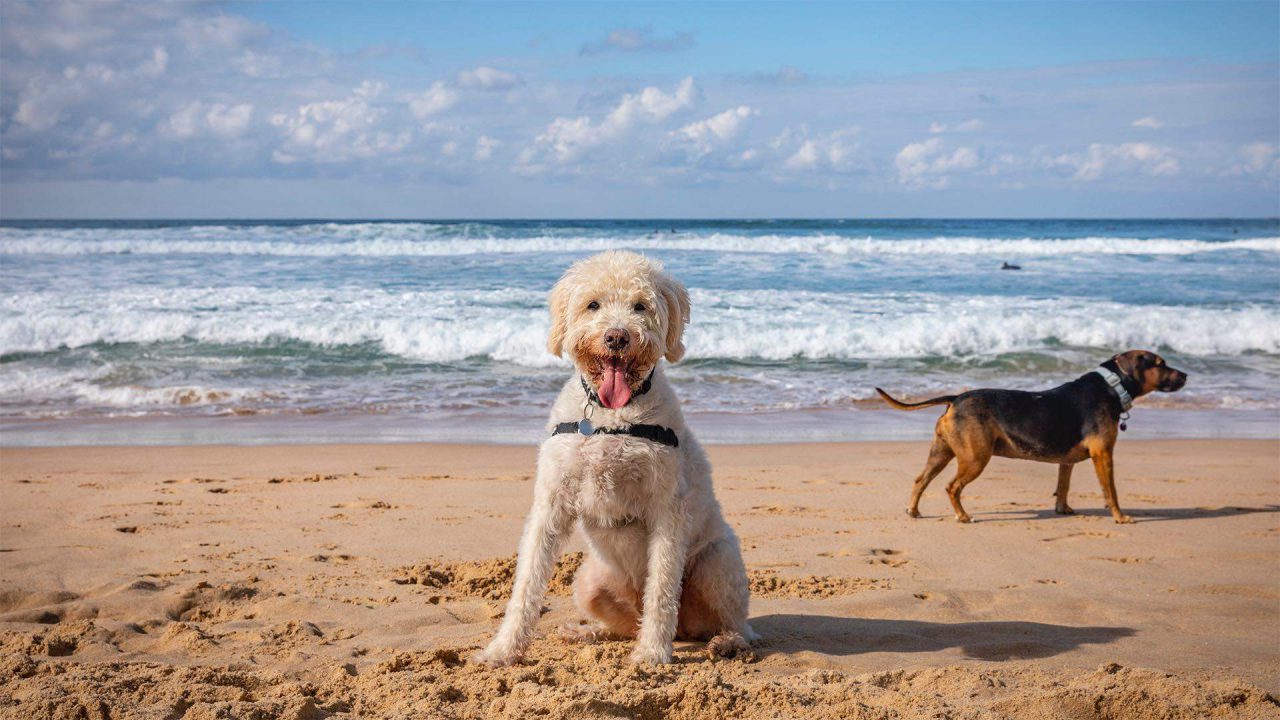
Running on soft sand uses far more energy than walking on firm ground, rapidly building heat and dehydration. Combined with strong sun and reflective water, this is a prime heatstroke setup on beaches from Manly up to Palm Beach.
Backyards without enough shade or water
On hot days or during heatwaves, pets confined outdoors without cool shade, airflow and plentiful water can quickly overheat. Northern Beaches Council specifically urges residents to keep pets cool in summer and during heatwaves with shade, water and indoor options.
Strenuous exercise in the wrong part of the day
Long runs, fetch or jogs in the middle of the day or late afternoon on hot pavement can push even fit dogs into heat stress territory.
Breed and medical risk factors
Flat-faced breeds, thick-coated dogs (e.g. Huskies, Border Collies), older animals, overweight pets and those with heart or respiratory disease are more prone to heatstroke, even in conditions that healthy adult dogs might tolerate.
Early warning signs of heat stress & heatstroke
In dogs
- Heavy, continuous panting that doesn’t settle with rest
- Fast or noisy breathing, or obvious struggle to breathe
- Excessive drooling, thick or sticky saliva
- Gums that look very red, brick-coloured, pale, purple or blue
- Restlessness, anxiety or confusion
- Weakness, wobbliness or difficulty walking straight
- Vomiting and/or diarrhoea (sometimes with blood)
- Rapid heart rate
- Collapsing, seizures or loss of consciousness
In cats
- Open-mouth breathing or panting
- Drooling
- Bright red tongue or gums
- Lethargy, wobbliness, or lying stretched out and unresponsive
- Vomiting or diarrhoea
- Collapse or seizures
If you’re seeing any of these signs on a hot or humid day, treat it as an emergency.
First aid: what to do if you suspect heatstroke
Important: The steps below are first aid only – they must be done while you are contacting a vet and preparing to travel, not instead of veterinary care.
Move your pet out of the heat immediately
Bring them indoors into air-conditioning or a fan, or at least into deep shade with good airflow.
Start gentle cooling – not ice-cold shocks
Wet your pet’s fur with cool or tepid water (not icy water) focusing on the belly, armpits, groin and paws.
You can use a shower, hose on a gentle setting, or soaked towels that you change regularly.
Avoid covering them entirely with wet towels that trap heat.
Offer small amounts of cool water
Allow frequent small sips rather than big gulps that may cause vomiting.
Do not force water into your pet’s mouth if they can’t swallow normally.
Call a vet immediately
Ring your local clinic and describe symptoms. They can tell you whether to come straight in or head to a 24-hour emergency hospital.
Travel in a cool car
Keep air-con on or windows open; continue light cooling en route (damp towels, fan).
Never delay getting to a vet because your pet “seems a bit better” – complications can still develop after the initial episode.
Daily Prevention of heatstroke on the northern beaches & knowing when to see a vet
Plan around the heat
Check the forecast and avoid hard exercise on hot, humid days or in the middle of the day.
Walk early morning or late evening; use the “five-second pavement test” for hot ground.
Keep things cool at home
Make sure pets always have shade, airflow and multiple bowls of fresh water.
On extreme days, keep them inside in the coolest room with a fan or air-con if possible.
Use cooling mats, damp towels or shallow paddling pools (supervised) for dogs that enjoy water.
Cars, beaches and bushwalks
Never leave pets in a parked car, even for “just a few minutes”.
For beach or bush trips, pack water, a bowl and shade; limit intense fetch or running on soft sand.
Rinse off salt and sand afterwards and keep tick prevention up to date.
Extra care for higher-risk pets
Flat-faced breeds, seniors, overweight pets and those with heart or lung disease should stay indoors in the heat and have shorter, gentler walks.
When to call your vet vs go straight to emergency
Contact Vet-o Pet Services at Brookvale or your local daytime vet if:
- Your pet showed mild heat stress (heavy panting, slight lethargy) but improved after cooling
- They’re “not quite themselves”, or have existing health issues that could complicate recovery
Your closest general vet is often the best first stop. At Vet-o Pet Services, we can see urgent daytime cases and are frequently available up to 10 pm on weekdays and from 7:30 am in the mornings. If you’re further from Brookvale, there are other daytime clinics across the Northern Beaches that can help.
If something happens between roughly 9 am and 5 pm, a local clinic can usually examine your pet promptly or let you know if you should bypass them and head straight to an emergency hospital instead.
Go straight to a 24-hour emergency hospital if your pet has:
- Collapse, seizures or loss of consciousness
- Very noisy or distressed breathing, or blue/purple gums
- Repeated vomiting or diarrhoea, especially with blood
- Extreme weakness, inability to walk, or a very hot body plus any of the above signs
If you suspect a life-threatening emergency (such as heatstroke, severe breathing difficulty, seizures or major trauma), it is usually safest to go directly to a 24-hour emergency hospital like SASH Northern Beaches (Balgowlah) or Northside Emergency Veterinary Service (NEVS, Terrey Hills), where a full team and advanced equipment are on hand.
Tip: If possible, call the clinic or emergency hospital while you’re on the way. This gives the team time to prepare and offer specific first-aid advice over the phone. In critical situations such as suspected tick paralysis (very common on the Northern Beaches), snakebite or severe allergic reactions, those extra minutes of preparation can make a real difference.
Summer heat safety checklist for Northern Beaches pet owners
Use this quick list before every hot-weather day:
- https://www.manlyaustralia.com.au/info/weather-and-climate
- https://www.australia.com/en/facts-and-planning/weather-in-australia/sydney-weather.html
- https://www.rspcansw.org.au/information-and-advice/caring-for-animals/pet-hazards/heat-stress
- https://www.campbelltown.nsw.gov.au/Animals-and-Pets/Pet-Ownership/Preventing-Heat-Stress-in-Summer-for-Your-Dog
- https://www.northernbeaches.nsw.gov.au/services/emergency-preparedness/hazards/heatwave

Beach Safety Guide: Protecting Your Pets on Northern Beaches Year-Round

Promoting Optimal Mental Wellbeing in Dogs & Cats
